Reading the ladder
The ladder is a column of strikes with a number and a color on each. Everything else on the console is a summary of it. Learn to read one column and you can read the whole board.
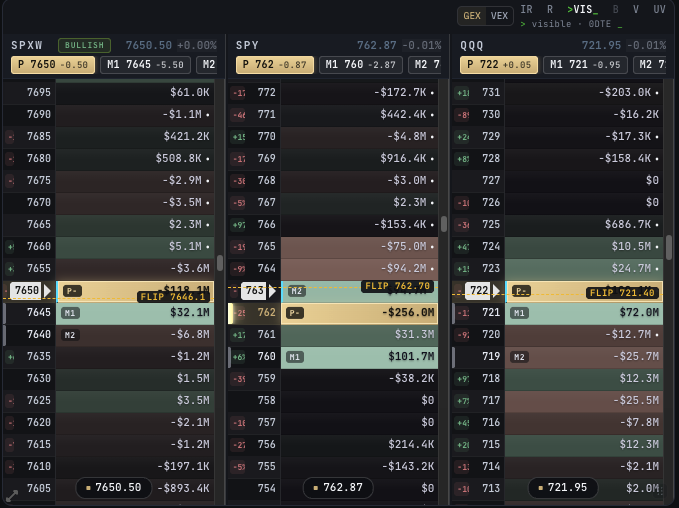
one SPXW ladder, mid-session, every element numbered The numbers below match Side by Side 2.3 items 5–17.
Read it in this order.
1Find spot. The cyan-edged row with the ▶ pip is the current price. Everything above it is above the market; everything below is below. The ladder keeps spot centered until you scroll away; ◎ brings it back.
2Find the primary. The solid gold row. That is the strike with the most dealer hedging behind it in this book right now. Its chip in the column header (P 7720 +1.40) tells you how far it is from spot, in points, and hover tells you which side's flow is leading there.
3Read its sign. The badge says P+ or P−. Positive: hedging leans against price as it approaches — a cushion. Negative: hedging pushes with price — an accelerant. Same strike, opposite behavior; the sign is the most important character on the ladder.
4Find the majors. M1 and M2, silver rails. The next two largest. Together with the primary they are the three strikes the rest of the console names.
5Read the color. Cells are colored by size on the palette you chose in Display. Brighter is bigger. The color is relative to the largest node in that column, so a bright cell in a quiet book is not the same size as a bright cell in a busy one — read the dollar figure when it matters.
6Find the flip. The dashed amber line. Above it the dealers' overall book leans one way, below it the other. Where spot sits relative to the flip is the fastest single read of the day's character.
7Watch what's moving. A green or red percentage left of a strike is a rate-of-change chip: hedging at that strike grew or shrank by 5% or more in the last minute (or the interval you chose). Chips linger for five minutes so you can catch them. A • marks confluence (3.9).
8Watch the primary itself. When the gold row jumps to a new strike it flashes three times. The Event log records it as a PRIMARY FLIP. A primary that stays put for hours and one that rolls every ten minutes are different days.
Three books. Side by Side puts SPXW, SPY and QQQ next to each other on purpose. SPY and QQQ are ETFs with their own option books; their nodes are their own, not scaled copies of SPX. When all three show a large positive primary above spot, that is one picture; when they disagree, that is another. The console's bias words summarize this, but the ladders are where you see it.
What the ladder doesn't tell you. Where price is going next. It shows where hedging is concentrated now and which way that hedging will lean if price gets there. It does not know about the CPI print at 08:30 or the block trade about to hit.